
branded content
The godfather of biodiversity’s final journey to the Amazon
It was clear to his daughters what their papa wanted. He had told them from his hospital bed, with a crooked smile and a twinkle in his eye: he wanted his ashes brought back to Camp 41.
written by:hhadmindate published: May 02, 2026 content type: behind the scenes
To the world, their father was Dr. Thomas Lovejoy, the godfather of biodiversity, a man who advised seven U.S. presidents, credited by many with creating the long-running PBS series Nature, and who spent nearly six decades working to save the Amazon.
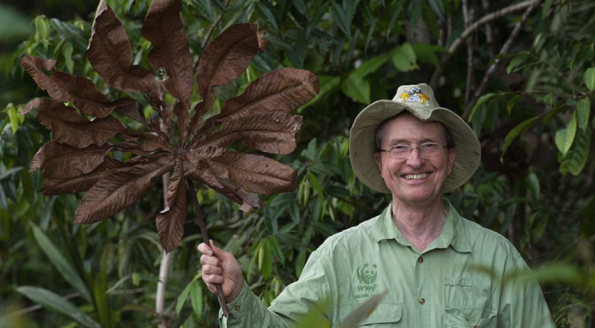
To Kata Petty and her sisters Betsy and Annie, he was Papa. To his grandchildren, he was Vovo.
In 2021, Tom Lovejoy died on Christmas Day, his favourite day of the year. A year later his family returned his ashes to the Amazon rainforest he had devoted his life to protecting.
Back to Camp 41: Tom Lovejoy’s Final Journey to the Amazon is a documentary produced by Hemmings House and longtime partner Council Fire that follows that journey. It has screened on all seven continents, generated dozens of heartfelt tributes from people who had known and revered Lovejoy, and has already inspired youth to pursue careers in conservation biology.
It is one of the more quietly extraordinary films in the Hemmings House catalogue and, like the best of what the team has made over 20 years, it became something larger than anyone planned.
The story that needed telling
Council Fire’s George Chmael II had been sitting with a question for years. An environmental litigator turned sustainability leader, George was a close friend of Kata and her husband, Dave. He had followed Tom’s career closely and often quizzed Kata as to why no one had told her father’s amazing story.
George made it his mission to rectify that. He and Greg Hemmings of Hemmings House were already strong allies through the B Corp community and the two began developing a concept together. Then COVID froze the industry. And then Tom Lovejoy died at 80.
The project could easily have died with him. Instead, it transformed.
Camp 41 was Lovejoy’s Amazon research station, 41 kilometres from the nearest highway in continuous rainforest, and the base for what became the longest continuously running scientific research station in the Amazon.
It was also a place Tom returned to every year, hosting family, close friends, Hollywood stars, and conservation luminaries, believing the forest itself was the most powerful argument for protecting it.
Why the family said yes
A year after his death, his family organized the journey to return his ashes and asked George and Greg to accompany them. Putting the most intimate moments of their grief on film, to be seen by audiences around the world, was not a small thing. But Kata and her sisters made a deliberate choice.
“We felt the purpose of the film was to reach a broad audience and strengthen his legacy,” Kata says. “The more people who understood what my father had done and who he had been, the stronger the support for his work continuing after him.
Having the personal part on film was a critical part of the movie. It was one of the themes we knew would reach people and touch people.”
Greg made the decision easier. Through the journey to Brazil and the days in the Amazon, Kata says the family barely noticed he was filming.
A lot of times we never knew he was filming, but he was there in the back, very politely doing the work he needed to do. It never felt uncomfortable. It always felt really easy.”
Alone in the Amazon
The trip had originally included two additional crew members: George himself, and his son Zach, who had been doing the drone work. Zach fell ill first, followed quickly by George, and the two spent the later part of the trip sick in a hotel room in Manaus rather than in the forest.
By the time the group reached Camp 41, Greg was on his own. No second camera, no drone operator, no one to share the weight of interviewing a grieving family at the most significant site in their father’s life. The Hemmings House team would do the heavy lifting in post-production, but in those days in the Amazon, it was Greg alone.
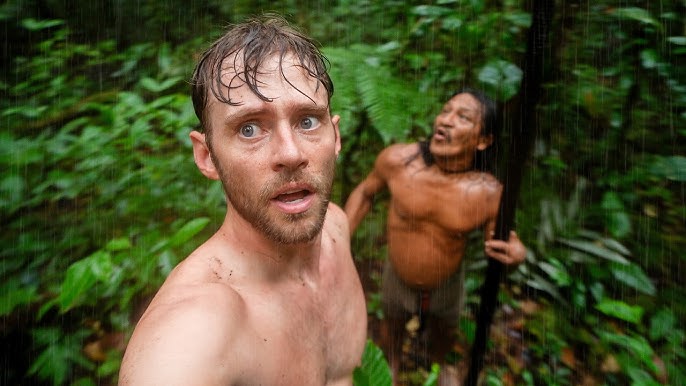
What he captured was something few cameras ever reach. The journey took hours: bus to trucks, trucks down muddy first-gear grinding roads, then a trail into the forest, a dark tunnel of trees, and suddenly the camp opening up. Colourful hammocks, filtered light, the oldest observation tower in the Amazon.
The family arrived to find the research station had built a small memorial garden for Tom. Kata and her sisters weren’t prepared for it.
“This is the hard part,” Tom’s daughter Annie says in the film.
Greg also discovered, while assembling the material, that renowned broadcaster and naturalist David Attenborough had recorded a brief tribute for Lovejoy’s memorial service. George and the sisters worked to secure Attenborough’s permission and his voice became the film’s spine, woven through as a recurring thread.
“The word that comes to my mind is radiant,” Attenborough says. “He had the broadest and most infectious smile I’ve ever known.”
What the film became
George has received dozens of expressions of heartfelt thanks from people who saw the film. Many said the same thing: thank you for this gift. Lovejoy’s death had been sudden, in the middle of COVID, and almost nothing existed to help the people who revered him process the loss.
“So many conservation giants, colleagues, friends, and family members reached out to thank us for giving them something to cherish and remember Tom by,” George says.
Kata has seen the film’s reach extend in ways her father would have understood immediately. A college-aged son of a close friend watched it and, in Kata’s words, “wants to be a conservation biologist and is dying to go to Camp 41.” She has already connected him with one of her father’s scientist colleagues.
The place that shaped Lovejoy’s life is now drawing the next generation toward it, through a film that almost wasn’t made.
The bigger story
The Amazon that Lovejoy spent his life defending now sits at 17 per cent deforestation or greater. He believed the ecosystem begins to irreversibly collapse somewhere between 20 and 25 per cent.
He always held out hope that it can be saved.
“Without hope, there is no point,” he said. “Optimism is our only option.”
Tom Lovejoy spent his life trying to make people love something enough to fight for it. He understood that you can know the data and still do nothing. But you cannot love a place and walk away from it.
Back to Camp 41 carries that argument forward.
For Kata, the three threads of the family’s grief, her father’s legacy, and his lifelong argument for hope came together in a way that still impresses her.
“Greg, George, and the whole team did an amazing job weaving these themes together,” she says. “It just flows so beautifully. You’ve got three different messages in one short film. It’s very impressive.”
If you’re working to preserve a legacy, build a movement, or make the world see something it has been missing, reach out to the team at Hemmings House: hello@hemmingshouse.com.
Things to Read Next
The Film That Catalyzed a Movement
back to beyond the frame view next Click Here culture, behind the scenes Blog title…
Rethinking Success: The Story Behind the Millennial Dream
back to beyond the frame view next Click Here culture, behind the scenes Blog title…
Emily Rodger: From reluctant subject to TV host, and a life transformed
back to beyond the frame view next Click Here culture, behind the scenes Blog title…